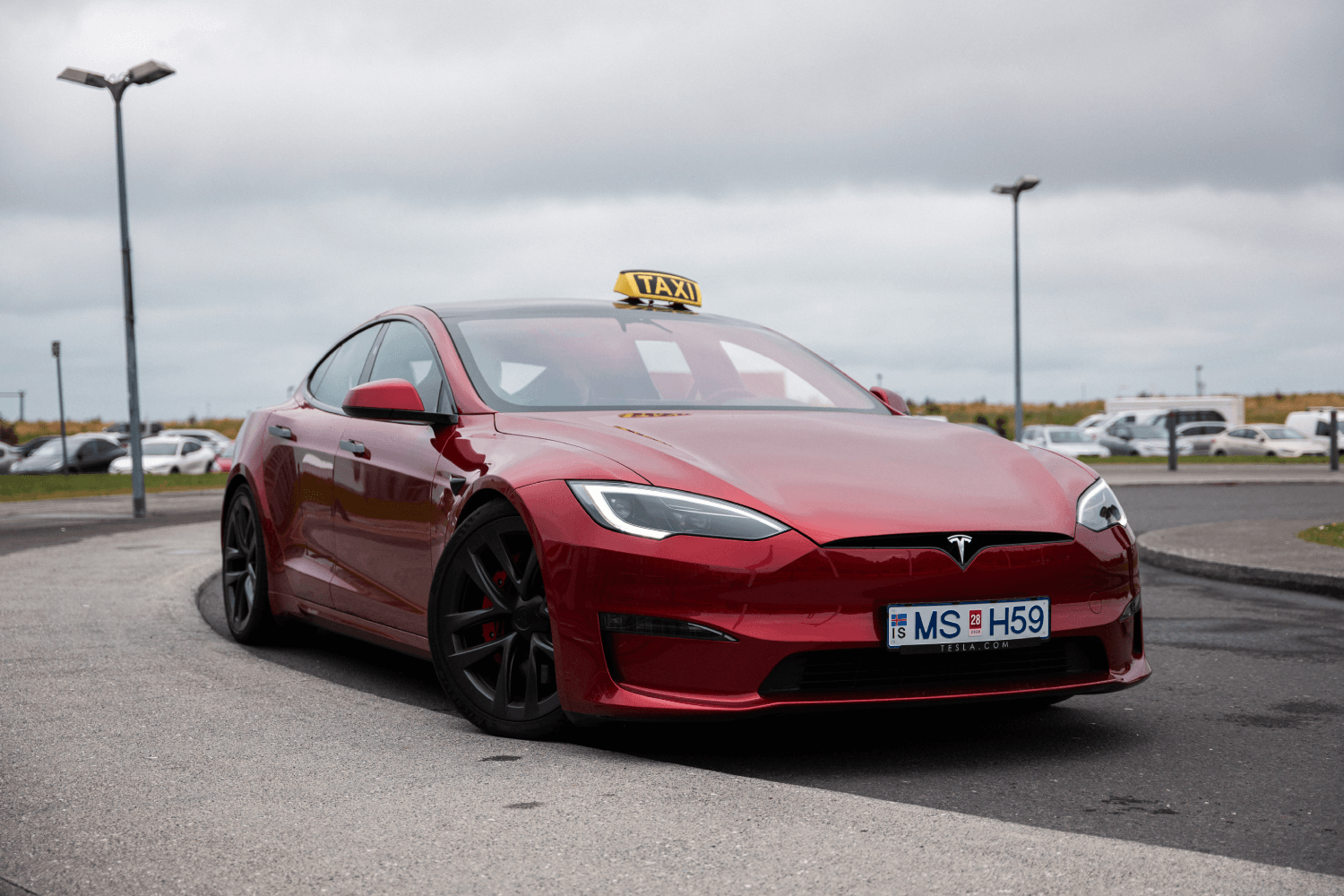
Why is Uber not available in Iceland?
If you’ve just landed at Keflavik Airport, opened your phone, and typed “Uber” into the search bar hoping to book a ride into Reykjavik, you’re not alone. Every year, thousands of visitors to Iceland do exactly the same thing — and every year, they get the same surprising answer: Uber doesn’t operate here. Not in Reykjavik, not in Akureyri, not anywhere on the island.
For travelers coming from the United States, the United Kingdom, most of Western Europe, or large parts of Asia, this can feel strange. Uber has become so synonymous with “getting a ride” that its absence in a modern, tech-forward country like Iceland raises an obvious question: why?
The answer isn’t a single reason — it’s a combination of market size, regulation, labor law, and the simple economics of ride-hailing. In this guide, we’ll walk through exactly why Uber has never launched in Iceland, whether that’s likely to change, and — most importantly — what you should use instead if you need a taxi, an airport transfer, or a private driver during your trip.
The short answer
Uber has not launched in Iceland because the market is small, the regulatory environment for transportation is strict, and Iceland’s taxi industry operates under a licensing system that doesn’t easily accommodate Uber’s traditional gig-economy model. Rather than fight years of regulatory negotiation for a market of roughly 400,000 people, Uber has simply chosen not to enter.
That’s the one-sentence version. Let’s unpack each part of it.
Reason 1: Iceland is a very small market
Uber is a publicly traded company that answers to shareholders, and every new market launch requires city-by-city investment: legal teams, driver recruitment, marketing, local operations staff, and regulatory lobbying. Uber tends to prioritize markets where the population density and ride volume can justify that investment relatively quickly.
Iceland’s entire population is around 400,000 people, with the greater Reykjavik capital region accounting for roughly two-thirds of that number. Compare that to cities Uber already operates in — London, Paris, New York, or even mid-sized European capitals with millions of residents — and it becomes clear why Iceland sits far down the priority list. Even accounting for the roughly two million tourists Iceland receives annually, the year-round, everyday ride volume simply isn’t large enough to make Iceland an obvious target compared to larger, unserved markets elsewhere.
This isn’t unique to Iceland. Uber has also stayed out of several other small, geographically isolated markets around the world for similar reasons.
Reason 2: Iceland’s taxi regulations are strict
Iceland’s taxi industry is one of the more tightly regulated in Europe. To legally operate as a taxi driver in Iceland, drivers typically need:
- A professional taxi driver’s license issued by Icelandic transport authorities
- Membership or affiliation with a recognized taxi station or dispatch service
- A vehicle that meets specific safety, insurance, and inspection standards
- Compliance with fare regulation and metering requirements in certain cases
This licensing structure exists to protect passenger safety and ensure drivers are properly vetted, insured, and trained — especially important in a country where winter driving conditions, remote roads, and unpredictable weather can turn an ordinary trip into a genuinely dangerous one if the driver or vehicle isn’t prepared.
Uber’s classic global model relies on onboarding large numbers of independent drivers quickly, often with a personal vehicle and minimal formal licensing beyond a background check. That model runs directly into conflict with Iceland’s licensing requirements, which are closer to traditional taxi regulation than the lighter-touch rules Uber has negotiated in some other countries.
Reason 3: Icelandic labor law and worker classification
Uber has faced legal battles across Europe over how it classifies drivers — as independent contractors versus employees. Iceland has strong worker protections, and Icelandic authorities have generally taken the position that transportation work performed under Icelandic law should meet Icelandic employment and licensing standards, regardless of whether the booking happens through an app.
Rather than negotiate a bespoke legal framework for a small market, Uber has simply avoided Iceland altogether. This is a business decision as much as a regulatory one: the cost of fighting for a new legal classification in Icelandic courts wouldn’t be worth it for a market this size.
Reason 4: A well-established local taxi culture already exists
Iceland already has a functioning, well-organized taxi industry. Reykjavik and the surrounding areas are served by established taxi stations, and in recent years, local companies have modernized by launching their own booking apps — bringing app-based convenience to a market that Uber never entered.
This matters because it removes one of Uber’s usual advantages when entering a new market: being the first mover to bring app-based, cashless, trackable rides to a city still relying on street hails and phone calls. In Iceland, local operators got there first. Travelers can now open an app, see estimated fares, track their driver, and pay by card — the same convenience Uber offers elsewhere — without Uber needing to be involved at all.
Is Uber ever coming to Iceland?
There’s no public indication that Uber is planning to launch in Iceland. The company has not announced any Icelandic expansion, and none of the structural barriers described above — small market size, strict licensing, and labor classification rules — have meaningfully changed in recent years. For travelers planning a trip to Iceland, the safest assumption is that Uber will not be available, now or in the foreseeable future, and it’s worth planning your transportation accordingly.
This is a common pattern for travelers. Search interest around “Uber Iceland” and “is Uber available in Iceland” stays consistently high year-round precisely because so many visitors assume it will be there — and are surprised to learn otherwise, usually after they’ve already landed. If you’re reading this before your trip, you’re ahead of the curve.
What should you use instead?
Fortunately, the absence of Uber doesn’t mean Iceland lacks convenient transportation. If anything, local operators have built app-based services specifically designed around Iceland’s roads, weather, and tourist patterns — arguably a better fit than a global platform not built with Icelandic winters in mind.
OberCab is one of the transportation platforms filling this gap. Licensed to operate in Iceland, OberCab offers an app-based experience that mirrors what international travelers already expect from ride-hailing apps elsewhere, including:
- City rides around Reykjavik and other areas, booked directly through the app
- Airport transfers to and from Keflavik International Airport, with flight tracking so your driver adjusts to delays
- Private driver services, available by the hour or for specific destinations
- Tours, including popular routes like Reykjavik to the Blue Lagoon or Sky Lagoon
- Package delivery, for anything from documents to retail parcels
- Transparent, upfront pricing with no surprise fees
- Secure in-app payment through major credit cards, Visa, and Mastercard
Because OberCab is built specifically for the Icelandic market and licensed under Icelandic transportation regulation, it avoids the exact legal friction that has kept Uber out of the country. That means you get an app-based, trackable, cashless experience — the parts of Uber that travelers actually want — without any of the regulatory uncertainty.
A quick comparison: What travelers actually miss about Uber
When people say they wish Uber was in Iceland, they’re usually not attached to the Uber brand specifically. They’re describing a set of features they’ve come to expect:
- Booking a ride without speaking the local language — solved by app-based booking with clear pickup and destination fields.
- Seeing the fare before you commit — solved by upfront, transparent pricing.
- Tracking your driver in real time — solved by GPS tracking within the app.
- Paying without cash — solved by secure in-app card payment.
- Trusting the driver is vetted — arguably better solved in Iceland, where drivers must meet formal licensing requirements rather than a basic background check.
In other words, the convenience travelers associate with Uber is fully available in Iceland — it’s just delivered by a different, locally licensed company.
Frequently asked questions
Does Uber operate anywhere in Iceland? No. Uber does not currently operate in Reykjavik, Akureyri, or anywhere else in Iceland.
Can I use the Uber app at all while in Iceland? You can open the app, but you will not be able to book a ride, as Uber has no active drivers or licensed operations in the country.
Is Lyft available in Iceland instead? No, Lyft is a U.S.-only platform and has never operated outside North America, so it isn’t an option in Iceland either.
What’s the best Uber alternative in Iceland? Locally licensed, app-based services like OberCab are the closest equivalent, offering similar booking, tracking, and payment convenience.
Will Uber ever launch in Iceland? There’s no indication of an upcoming launch. The market size and regulatory structure that have kept Uber out for years remain unchanged.
Final thoughts
Iceland’s lack of Uber isn’t an oversight — it’s the predictable result of a small population, strict transportation licensing, and a legal environment that doesn’t fit Uber’s usual playbook. The good news for travelers is that this gap has already been filled by locally licensed alternatives built specifically for Icelandic roads, weather, and regulations.
Before your next trip to Iceland, skip the search for an Uber that isn’t coming, and download an app-based service that’s actually built for the country you’re visiting. Download the OberCab app and book your ride, airport transfer, or tour before you even land.